Do Tape-In Extensions Damage Your Hair? The Honest Stylist Answer
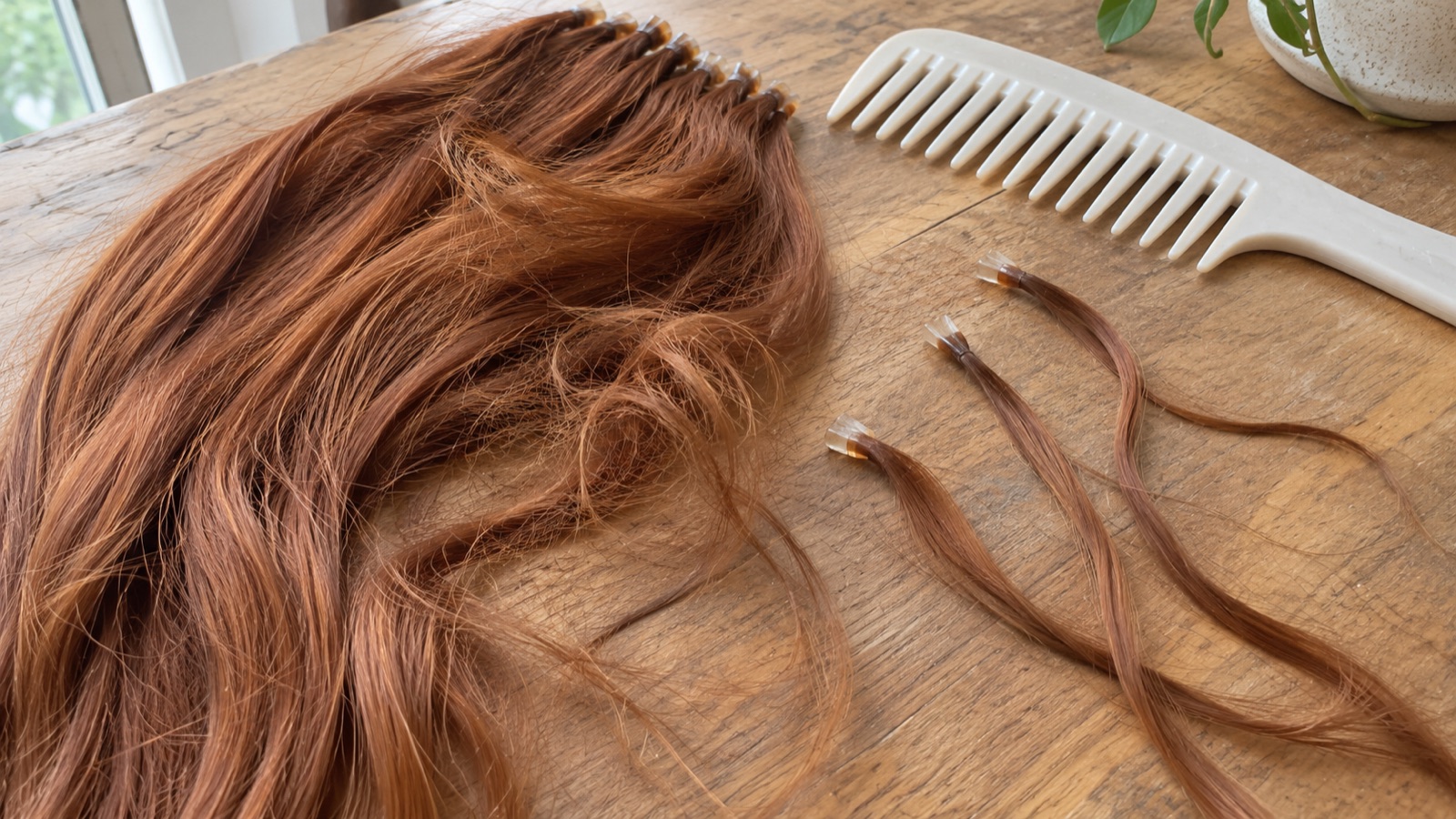
Our assessment: tape-in extensions do not inherently damage hair. The damage that gets attributed to tape-ins is almost always the result of one of four preventable problems: wrong placement, poor removal technique, too-frequent reapplication, or natural hair that was not in condition to support them. The method itself is not the villain here.
That said, tape-in damage is real and it does happen, and dismissing it entirely would be dishonest. What follows is a precise breakdown of when tape-ins are safe, when they are not, and how to tell the difference before you book an appointment.
The Myth: Tape-Ins Always Cause Breakage
The belief that tape-in extensions universally cause breakage traces back, in most cases, to two sources: bad removal experiences and before-and-after photos shared without context. Both are real, but neither tells the full story.
Bad removal is the primary driver of tape-in damage. When a stylist or a client removes tape wefts without a dedicated bond remover solvent, the adhesive does not release cleanly from the natural hair shaft. The hair that was trapped in the sandwich gets mechanically pulled. That is not a property of tape-in extensions as a method; it is a property of removing any adhesive from hair without dissolving it first.
The before-and-after photos circulating on forums and social media showing thinning hairlines and bald patches typically involve one of three scenarios: a client who removed their own tape-ins at home without a solvent, a client whose extensions were placed too close to the scalp (a placement error, not a method flaw), or a client whose natural hair was already compromised by chemical processing before the extensions went in.
The Reality: When Tape-Ins Do Cause Damage
Honest analysis requires naming the conditions under which tape-in damage genuinely occurs, and they are specific.
Placement within 5mm of the scalp. The natural hair near the scalp goes through an active growth cycle and moves more than hair at mid-shaft. A tape sandwich placed within 3 to 5mm of the scalp creates tension that the hair cannot accommodate as it grows. Over 6 to 8 weeks, that tension can cause traction alopecia along the weft line. This is a placement error, not a method error, but it happens frequently enough that it deserves explicit mention.
Reapplication without adequate rest. Tape adhesive, even the premium medical-grade formulas used by professional stylists, does leave a residue on the hair shaft. When tape-ins are reapplied to the same section of hair without allowing adequate conditioning treatment between sets, that residue builds up and weakens the cuticle. Clients who do tape-in after tape-in without a two to four week break for deep conditioning between sets will see cumulative shaft damage over 12 to 18 months.
Application to chemically compromised hair. Bleached hair, hair that has been relaxed, or hair that was colored repeatedly before extensions are applied has a compromised cuticle. The tape adhesive bonds more aggressively to porous hair. Removal is harder, and the adhesive-to-hair contact is over a weaker structure. A stylist doing a thorough pre-extension consultation will check porosity before confirming tape-ins as the right method.
Improper sectioning causing mechanical tension. Tape-ins should be distributed evenly across the head with natural hair sections that can support the weight of the weft. A stylist who places multiple tape wefts in the same thin section, or who applies wefts to sections with fewer than 40 natural hairs per sandwich, creates a weight-to-hair-count ratio that causes breakage at the roots over time.
What Good Tape-In Application Actually Looks Like
A tape-in extension applied by a trained specialist leaves no noticeable tension when the client shakes her head. The weft should move with the natural hair, not pull against it. If a client feels pulling or tightness at the scalp within the first 48 hours, that is a diagnostic signal worth calling her stylist about immediately, not something to wait until the next appointment to address.
The sandwich should be placed at a distance from the scalp that accounts for at least 6 weeks of growth before the tape is close enough to cause tension. Most experienced stylists place tape-ins at 8 to 10mm from the scalp for clients who grow more than half an inch per month. A stylist placing tape at 3mm from the scalp is cutting the margin to zero and guaranteeing an early move-up or a damage incident.
Removal should always use a dedicated bond remover, applied to the seam of the tape sandwich and allowed to dwell for the manufacturer’s recommended time before the weft is gently worked loose. Our testing found that the most common removal damage incidents came from salons rushing the removal process during busy move-up appointments, not from any inherent property of the tape adhesive itself.
How to Know if Your Hair Can Support Tape-Ins
The pre-consultation checklist a good extension stylist should run through before confirming tape-ins includes: strand strength test (is the natural hair snapping under light tension?), porosity check (does the hair absorb water instantly, or does it bead?), scalp health assessment, and a review of recent chemical service history. That consultation should happen in person, not via a photo submission, for anyone who has had significant color work or chemical processing in the previous six months.
Clients with hair that is below shoulder length and of fine texture are the population most at risk for tape-in damage, not because the method is inherently wrong for them, but because fine, short hair has fewer natural strands per section and less weight to counterbalance the weft. Some stylists in this situation recommend a hybrid approach: fewer tape sandwiches at a lighter weight, supplemented with clip-ins for volume events. Others simply recommend a different method. Both are correct answers.
The Bottom Line on Tape-In Extensions and Damage
Tape-in extensions applied by a trained professional to appropriately healthy hair, with correct placement and proper removal, do not cause lasting damage. The damage stories that have given the method a mixed reputation are overwhelmingly the result of skipping one or more of those conditions. The risk is real but it is preventable, and it is concentrated in specific, identifiable scenarios.
The practical takeaway: ask your stylist specifically about their removal process before you book. Ask how they handle thick versus fine hair clients differently. Ask what they do when a client’s porosity is high. A stylist who can answer those questions in detail is one whose tape-in technique is unlikely to leave you with a damage story to tell.
Frequently Asked Questions
Do tape-in extensions cause hair loss?
Tape-ins can cause traction alopecia if placed too close to the scalp or removed without a bond solvent, but this is a technique error, not an inherent property of the method. Applied and removed correctly, tape-ins do not cause hair loss.
How long can you wear tape-in extensions without damage?
Most tape-in clients wear them continuously for 1 to 3 years with regular move-ups every 6 to 8 weeks. The key is allowing proper conditioning treatment between reapplication cycles and never skipping the bond remover step at removal.
Are tape-in extensions safe for fine hair?
Fine hair requires more careful sectioning and lighter weft weights, but tape-ins can be safe for fine hair when applied by a specialist who adjusts placement and weft count accordingly. A thorough in-person consultation before booking is essential.