Tape Weft vs Tape-In: What's the Actual Difference and Which Should You Offer?
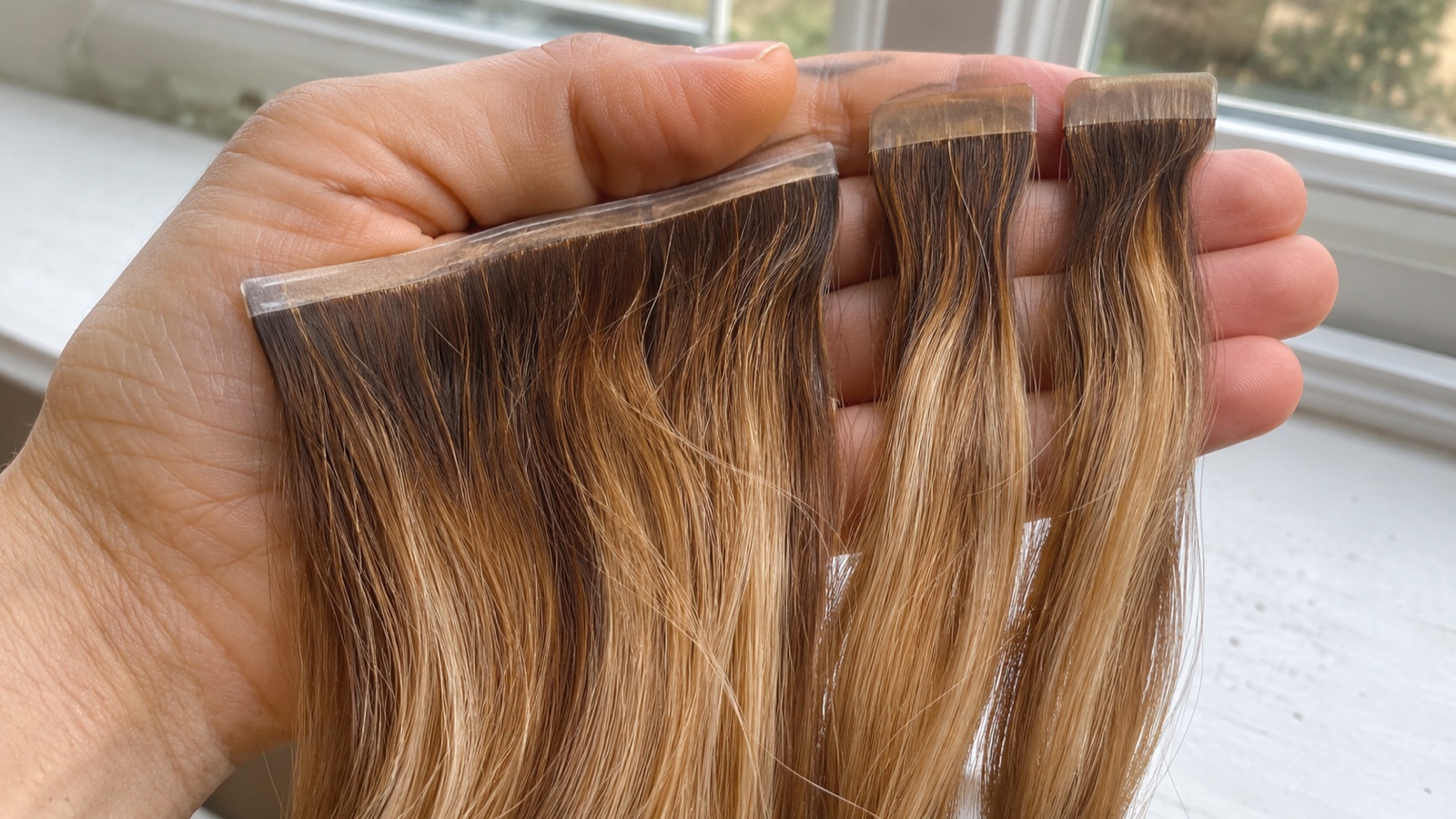
Tape weft and tape-in extensions sound like they should be the same thing. They are not, and the confusion between the two methods is responsible for a meaningful percentage of mismatched installs, where a client gets the method a stylist knows how to do rather than the one that would actually work for their hair. Here is what separates them, who each method is actually designed for, and which one tends to perform better in real-world use.
What Tape-In Extensions Actually Are
Tape-in extensions have been the dominant tape-based method for roughly 15 years. Each piece is a single pre-taped weft, typically 1.5 inches wide and available in lengths from 14" to 26", applied in sandwich pairs: one extension above the natural hair section, one below, adhesive sides pressed together. The adhesive is a polyurethane-based tape that bonds at body temperature and re-activates during move-up with a heat tool.
The method was designed for medium-density natural hair. It distributes the extension weight across the attachment surface (both tape pieces share the load), which makes it more comfortable over time than methods that concentrate weight at a single bond point. A full installation typically uses 40 to 80 pieces and takes 1.5 to 2.5 hours in the chair, with move-up appointments every 6 to 8 weeks.
The practical limitations: because each piece is narrow, fine natural hair sections can show the tape line at the hairline or part, particularly in the first few weeks before the hair settles. The adhesive is also sensitive to oil-based products and certain silicones, which means product restrictions are non-negotiable for tape-in clients.
What Tape Weft Extensions Actually Are
Tape weft is a newer category, commercially available in its current form since approximately 2020 to 2022 depending on the market. The fundamental difference is the weft itself: tape weft uses a continuous machine-sewn weft (similar in construction to a hand-tied or machine weft) with tape applied to the top edge at regular intervals, rather than individual pre-cut pieces with tape on each one.
The installation approach is different as a result. The weft spans a wider section of head, often 6 to 8 inches rather than 1.5 inches, and the tape points hold the weft flat against the scalp without the sandwich application that tape-ins require. Installation time is typically shorter (1 to 2 hours for a full head), and the number of attachment points is lower, which some clients find more comfortable during the adjustment period.
The weight distribution is also different. Tape weft concentrates less adhesive contact across more hair, which can make it appropriate for some hair densities that tape-in panels would stress. However, because the weft is wider, any single attachment point carrying disproportionate weight (from a section that did not lay flat) creates a different kind of tension than tape-in creates.
Our Assessment: Head-to-Head Performance
Longevity: Tape weft and tape-in perform comparably when installed correctly on an appropriate candidate. The limiting factor in both cases is usually client compliance with product and heat restrictions, not the method itself. In our assessment, tape-in installs show slightly higher slippage rates in warm-climate markets where clients are more likely to encounter sweat and humidity at the attachment points. Tape weft adhesive formulations vary more across brands, and low-quality tape weft tape will outperform nothing but underperform quality tape-in tape.
Natural hair suitability: Tape-in has a narrower ideal candidate range. It works best on medium-density hair with a reasonably uniform texture through the mid-lengths. Very fine hair and certain curl patterns create visibility and tension problems with the sandwich method. Tape weft is more forgiving of density variation because the attachment points distribute differently, but it is not without limitations — hair that is very fine at the nape will still show attachment points regardless of method.
Maintenance complexity: Both methods require 6 to 8 week move-up appointments. Tape-in move-up involves removing, cleaning, and re-taping individual pieces; tape weft move-up involves the same but for a smaller number of wider segments. Stylists who have worked with both methods generally report that tape weft move-up is faster per appointment but requires more precision in re-attachment placement because the wider segments have less tolerance for misalignment.
Cost: Tape-in installations typically run $400 to $900 depending on the market and hair source. Tape weft installations are in a similar range, with some stylists pricing them slightly higher to account for the newer technique premium and the longer weft material cost. Move-up appointments run $150 to $350 for both methods in most US markets.
Which Method Has the Better Track Record for Real Clients
Tape-in has a 15-year body of real-world results. Stylists who have been working with it since the early 2010s have refined their sectioning, placement, and aftercare protocols to a degree that produces reliably predictable outcomes for clients who are good candidates. The method is well-understood.
Tape weft is newer and the variation in implementation quality is higher. Because the category emerged from multiple brands simultaneously with different tape formulations, weft constructions, and application protocols, the performance range across stylists and markets is wider than tape-in. A well-trained tape weft specialist with access to quality materials produces excellent results. A stylist adapting tape-in technique to tape weft without updated training is more likely to create a tension or placement problem.
Our honest assessment for clients evaluating both: tape-in is the lower-variance choice if you are finding a stylist you do not already know, because the technique has been standardized longer. Tape weft is worth the search for a specifically trained specialist, particularly if your hair type sits outside the tape-in ideal candidate profile.
What not to do: do not choose the method based on which sounds more premium or which one was described more enthusiastically at the consultation. The right method is the one that matches your hair density, lifestyle, and maintenance commitment, and that your stylist has verifiable experience installing.
Frequently Asked Questions
Can you have both tape weft and tape-in extensions installed at the same time?
No. Mixing methods in the same installation creates inconsistent tension distribution and makes move-up appointments significantly more complicated. Stylists who specialize in one method will not typically mix in the other, and the attempt to do so suggests a stylist who does not have full confidence in either method.
Is tape weft better for fine hair than tape-in?
Potentially, but not automatically. Tape weft placement requires a stylist who understands how to section for fine hair specifically. A wide tape weft piece placed incorrectly on fine hair creates the same visibility problem as tape-in placed incorrectly, with less ability to isolate and fix a single piece. Fine hair requires a stylist experienced in fine-hair placement regardless of method.
How do you tell the difference between tape-in and tape weft at a move-up appointment?
Tape-in pieces come out in pairs: two narrow pieces peeled apart, each about 1.5 inches wide. Tape weft pieces come out as single wide segments, typically 6 to 8 inches wide, with tape at intervals along the top edge. If you cannot tell which method you have, ask your stylist to show you a removed piece before the new set goes in.
Which method holds up better in water and humidity?
Both methods require the same care around water: let hair dry at the root before sleeping, avoid saturating the attachment points, and follow product restrictions. Tape-in adhesive tends to show earlier slippage signals in persistently humid conditions. Tape weft uses similar adhesive chemistry and faces the same limitations, though the wider attachment surface means early slippage on one tape point does not immediately destabilize the entire piece the way it can with a narrow tape-in sandwich.